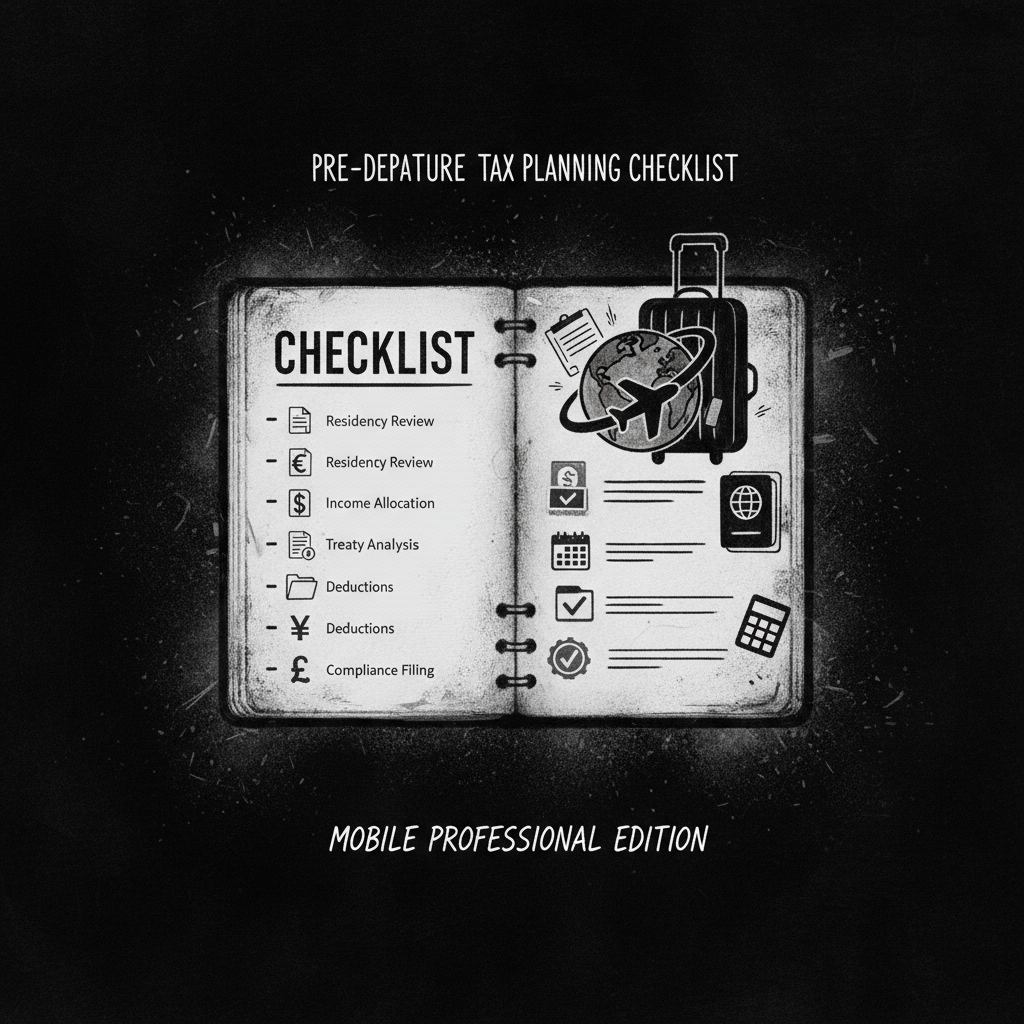
Digital relocation comes with an array of tax implications that can dramatically shape your financial landscape. Whether you are heading from the US to Europe or going in the opposite direction, forging a comprehensive plan before you depart is critical. By taking proactive steps, you can limit complications, prevent dual tax exposure, and protect your assets. Below is your pre departure tax planning checklist, broken into 10 essential items to address before you set foot in your new home country.
1. Residency End Date
Action: Identify exactly when your current tax residency ends. Some countries or states use the well-known “183-day rule” to determine if you have spent enough time to be classified as a resident. To avoid ongoing obligations, keep careful records of your stay and any official departure documentation.
Pitfall: Overlooking this detail can mean double taxation if you continue to be treated as a resident in your old jurisdiction while gaining tax residency in your new one. In places like California or New Mexico, for instance, you may still be on the hook for state taxes unless you proactively change your residency status [1].
2. Exit Tax
Action: Research if your country imposes an exit tax, which treats you as though you sold all your worldwide assets on the day you leave. In South Africa, for instance, ceasing tax residency can trigger a deemed disposal for capital gains purposes [2]. Consider working with a cross-border tax advisor to calculate potential liabilities and explore any deferral strategies.
Pitfall: Missing the exit tax window often leads to surprising tax bills. You might owe a large sum upon departure, creating logistical and cash flow issues if you need to liquidate assets to cover the tax due.
Blueprint Briefing
Notes for the globally mobile.
Selective intelligence on tax, residency, and structures.
By subscribing, you agree to receive Blueprint Briefing emails from Blueprint Group LLC. Unsubscribe anytime. Privacy Policy.
3. Asset Stepping
Action: “Stepping up” your assets can be beneficial when transitioning to a new tax system. In many jurisdictions, a step-up in the cost basis of assets (such as real estate or equities) can reduce future capital gains taxes. If you can legally adjust asset bases before arrival, the potential savings can be substantial [3].
Pitfall: Failing to complete this process may lead to avoided or partial credits on capital gains, leaving you with a bigger tax bill if you sell your assets after relocating.
4. Retirement Accounts
Action: Take stock of your 401(k), IRA, or other pension structures, and determine how local regulations in your destination interact with these plans. You may want to handle Roth conversions or other retirement contributions ahead of time, especially if the new country taxes these accounts differently [1].
Pitfall: Delaying decisions on retirement accounts could expose you to unfavorable tax treatments. Some countries do not recognize certain tax-deferred or tax-exempt statuses, resulting in unexpected liabilities if you wait until after your move.
5. Banking
Action: Centralize your banking approach by opening international-friendly accounts, determining your new primary bank, and maintaining only the necessary accounts in your home country. Pay close attention to balances because exceeding $10,000 in foreign accounts triggers US FBAR filing requirements [4].
Pitfall: Ignoring global reporting rules can lead to hefty penalties. FBAR non-filing fines, for instance, can reach up to $12,500 per violation per year.
6. Social Security
Action: Investigate how your new country treats social security contributions and benefits. The US, for example, generally taxes worldwide income, including retirement benefits, unless specific exemptions apply [3]. Check if your destination has a totalization agreement with your home country to avoid dual contributions.
Pitfall: Paying into two systems when you do not need to is a common trap. If you do not coordinate these benefits, you risk duplicate social security payments that do not translate into added benefit when you retire.
7. Currency Timing
Action: Plan your currency exchanges strategically. You might choose to convert a portion of your money prior to departure if your target currency is expected to appreciate, or hold off if you suspect your home currency will strengthen. Spread out the timing of exchanges to mitigate risk.
Pitfall: A single, large currency exchange on an unfavorable date can significantly dent your finances. Exchange rate swings can quickly offset careful tax planning, so stagger your conversions to reduce volatility risk.
8. Estate Docs
Action: Update your will, trust arrangements, and power of attorney documents to reflect your new location. Some countries have different inheritance tax rules, and certain trust structures may inadvertently cause double taxation if you do not adapt them before you move [5].
Pitfall: Overlooking estate documents can create burdensome estate tax issues or place your heirs in legal limbo should anything happen. Relying on outdated documents in a new jurisdiction frequently leads to costly probate disputes.
9. Dependents
Action: Account for how your children (or other dependents) fit into cross-border tax planning. If your spouse or dependent has different citizenship status, you may need additional paperwork or separate legal strategies. This extends to educational trusts or any nuanced asset held in a child’s name.
Pitfall: Omitting dependents from your roadmap can mean missing out on beneficial credits or exemptions. It can also expose your family to complicated cross-border guardianship or healthcare coverage requirements once you relocate.
10. Insurance
Action: Review health, life, and property policies for international coverage. If you can, opt for global health plans that let you receive care both in your new country and back in your homeland. Additionally, confirm whether your term or whole life insurance remains valid across regions.
Pitfall: Allowing policies to lapse or automatically renew without verifying cross-border coverage can leave you unprotected. If you have assets like a car or home that remain in your old location, ignoring those insurance responsibilities may result in penalties or coverage gaps.
By clarifying each of these 10 items in advance, you can systematically shield your finances from multiple sources of risk. Every country—and sometimes every region—enforces its own approach to residential status, exit taxes, or foreign bank reporting. Keeping each item on your radar helps you avoid complexity and ensures you transition smoothly. If you would like to go deeper into strategies for relocating, consult our move abroad playbook a 2026 guide for internationally mobile professionals.
This article is for informational purposes only and does not constitute legal, financial, or tax advice. You should consult a qualified professional to discuss your specific circumstances prior to making any final decisions.
Whether you plan to depart next month or next year, the best time to plan your pre-departure tax moves is right now. By assembling the right team—tax advisors, estate planners, and informative resources—you will position yourself for minimal disruptions and optimal tax outcomes in your new home.
References
Strategic Diagnostic
Worth a 30-minute conversation?
A no-charge call to map your priorities, jurisdictions, and the structure that fits.
Map My Strategy →Blueprint Briefing
Strategic notes from the borderless economy.
Hand-picked insights on residency, structures, and global mobility, for entrepreneurs and investors.
By subscribing, you agree to receive Blueprint Briefing emails from Blueprint Group LLC. Unsubscribe anytime. Privacy Policy.
Blueprint Global coordinates international structuring and project-manages the implementation process. We do not provide tax, legal, investment, or immigration advice. All advisory services are delivered by licensed professionals in their respective jurisdictions.
Explore Blueprint's services